
Moving on from CosleepingFrom bedsharing to their own sleep space, gently
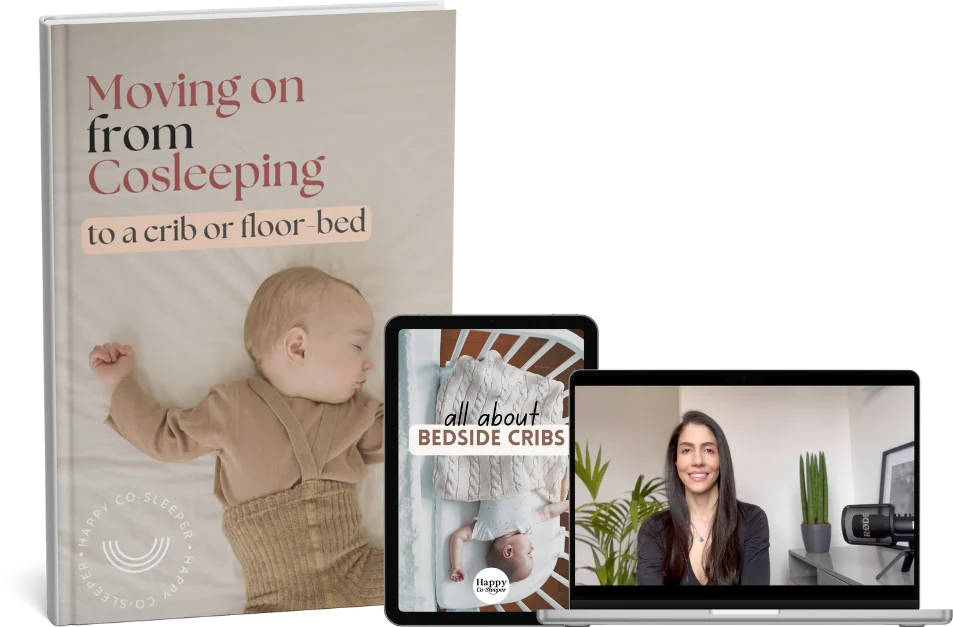
A step-by-step masterclass and guidebook to help your family move from bedsharing to a crib, cot or floor bed - for some of the night or completely - without sleep training.
$91 $47

Moving on from Cosleeping
Happy Cosleeper
What you will learn in this masterclass
- Understanding bedsharing and cosleeping: what the research really says, the benefits, challenges and when families usually transition
- Options for moving on: how to gently move your little one from your bed to a crib/cot in your room, their own crib, or a floor bed
- The Sleep Pyramid: how to layer new sleep associations step by step so your child can fall asleep and resettle more easily
- Preparing your child and yourself: role play, social stories, and strategies to support emotions during the transition
- Confidence-building strategies: activities like paper hearts, counting sheep, and invisible string to reduce separation anxiety
- Encouraging independent sleep: introducing new habits while respecting development and maintaining connection
- Troubleshooting common challenges: what to do if sleep gets harder before it gets better
The masterclass includes
- On-demand webinarhow to prepare your child, choosing between a floor bed or a crib, gentle steps to move to independent sleep, connection strategies and troubleshooting
- Moving on from Cosleeping Guidebooka compassionate, step-by-step guide to help your family transition from bedsharing to a separate sleep space, including a crib or a floor bed
Total value: $91. The masterclass: $47.
Questions
What age is it recommended for?
Some of the strategies are better suited to babies, while others are designed with toddlers in mind. For example, introducing a crib tends to work best for younger babies once their sleep is a little more consistent (ideally after 3-4 months when naps have a more regular pattern). For toddlers, floor bed setups and connection-based strategies (like using comforters, social stories, or playful "goodnight" games) often feel more natural and supportive. You can choose the approach that best matches your child's age and stage.
Does it involve sleep training or crying alone?
No. This programme does not use sleep training or cry-it-out, controlled crying, or separation-based methods. Everything here is gentle and responsive and based on connection. The steps are designed to respect your child's needs while supporting gradual change in a way that feels kind and manageable for everyone. There may be some tears and emotions, which are natural during change, but we will show you how to support your child with empathy.
How long does the transition take?
It depends on your family's pace and the approach you choose. Some families notice positive changes within a couple of weeks, while others prefer to take it slowly. The resources are available for life, so you can do it in your own time, when you and your little one are ready.
Do I need to move my baby to a floor bed?
Floor beds are an excellent option for gently transitioning your baby to more independent sleep while still allowing you to support them when needed, but it isn't the only way forward. Some families prefer cribs, some use just a mattress in their own room for longer, and others move straight to a toddler bed. In the masterclass, I walk you through the pros and cons of each setup so you can choose the option that feels safest and most practical for your family.
Do I have to move my baby to their own room?
Not at all. Many families start with the crib or mattress in their own room, then make changes later when it feels right. You can move at a pace that works best for your baby and for you.
What if I don't have a partner or any support?
Although it is lovely to have someone for support, you can absolutely go through the entire process by yourself. In fact, some mothers prefer that as it means you will continue to be your child's constant source of comfort during a difficult transition.
Can I continue bedsharing/cosleeping some of the time?
Absolutely! Many families do a blended approach, for example starting the night in the crib and bringing baby into bed in the early hours, or having them sleep in a floor bed and joining them at some point in the night. There are no rules, or must-dos! Flexibility is key. All families are different and children come with different needs and temperaments too!
Does it really work? Will my baby sleep through the night?
My courses aren't about "training" babies to sleep through, because sleep is developmental, and no programme can promise a full night without wakings (if they do, that's a red flag!). What I do offer are gentle, sustainable strategies to make your nights easier: helping your baby feel secure, reducing unsustainable sleep associations, and creating more opportunities for independent sleep, all while staying responsive to their needs. If you are looking for a quick fix and a guarantee that your baby will sleep through the night, this is not for you.
Will my baby still need night feeds?
Very likely! Moving to a crib or floor bed doesn't stop your baby's night needs. You'll still need to respond to feeds and comfort, but with strategies that make resettling in the crib easier and less disruptive for everyone's sleep. If you are looking to night wean, see our Night Weaning course, recommended for toddlers from 12 months.
Want help with partners or solo naps too?
Those are covered in the Gentle Transitions Bundle, which includes this masterclass. See the bundle

Hi, I'm Isadora
I'm a mum of 4 and a safe cosleeping advocate and educator. I help families who want to cosleep do it more safely, and find their way through every stage, from the newborn days to independent sleep and everything in between.
My advice is evidence-based. I also know the research on cosleeping has gaps, so I lean on real life too: my own family's, and the thousands of cosleeping families I've supported.